Saltwater Crocodile of Sundarban
The remarkable saying, ‘Crocodiles in the water, tigers on land,’ often makes me wonder who first coined it and what inspired them to do so. Taken literally, the expression fits the Sundarbans so perfectly that one might think it was created with the Sundarbans in mind. After all, apart from the Sundarbans, no other swamp forest is home to tigers, and likewise, crocodiles are not found anywhere else except in the rivers and canals of the Sundarbans.
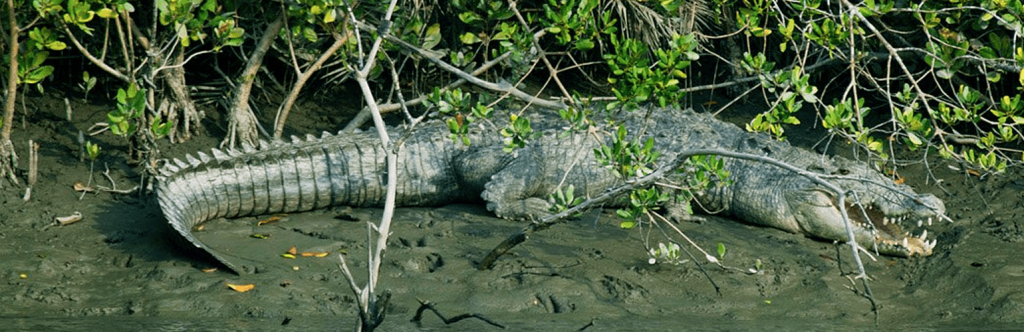
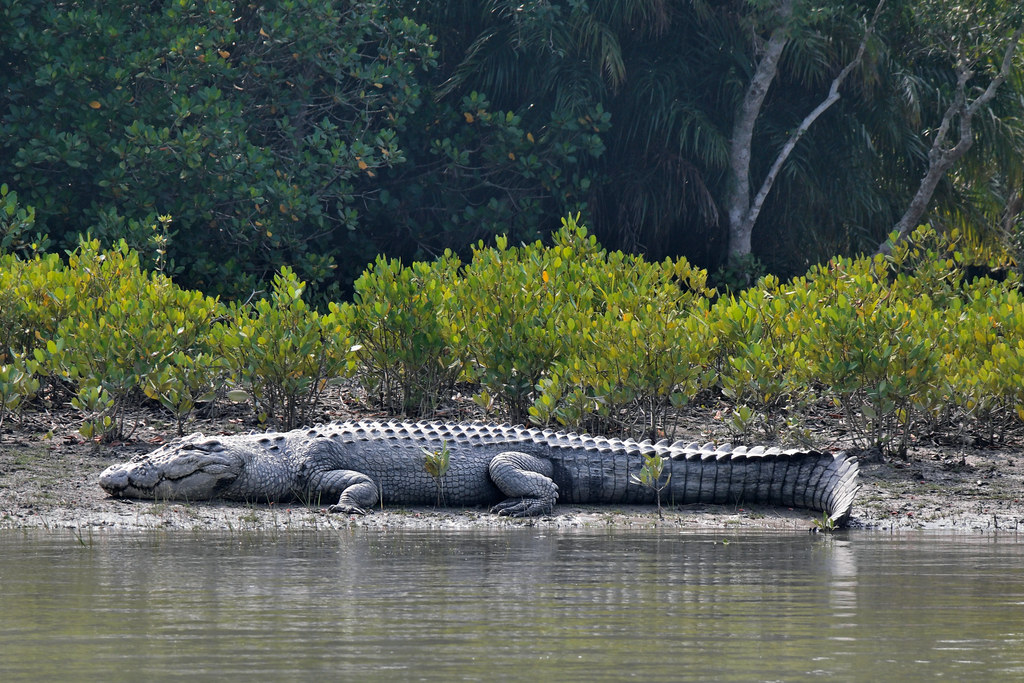
The crocodile found in the Sundarbans is called the Saltwater Crocodile. Among the three main types of crocodiles in the world, the saltwater crocodile is the largest. It can grow up to 23 feet in length and weigh as much as 1,000 kilograms. These crocodiles are found in Asia, Australia, and along the Pacific coasts. In Bangladesh, saltwater crocodiles are found only in the Sundarbans.
Two species of crocodiles are found in Asia. One is the Saltwater Crocodile, and the other is the Freshwater Crocodile. Freshwater crocodiles were once commonly seen in the rivers of Bangladesh and also lived in the northeastern part of the Sundarbans. However, they became extinct in the country during the 1970s. They are slightly smaller than saltwater crocodiles. Freshwater crocodiles can still be found in India, Nepal, and Sri Lanka.
Crocodiles are cold-blooded reptiles. This means that when the temperature of their surroundings drops, their body temperature also decreases. Unlike humans, crocodiles cannot control their own body temperature. Therefore, during winter, they bask in the sun on the muddy banks of the Sundarbans during low tide to stay warm. Sunbathing helps raise their body temperature and keeps their body functions active. That is why crocodiles are often seen on the mudflats of the Sundarbans in winter.
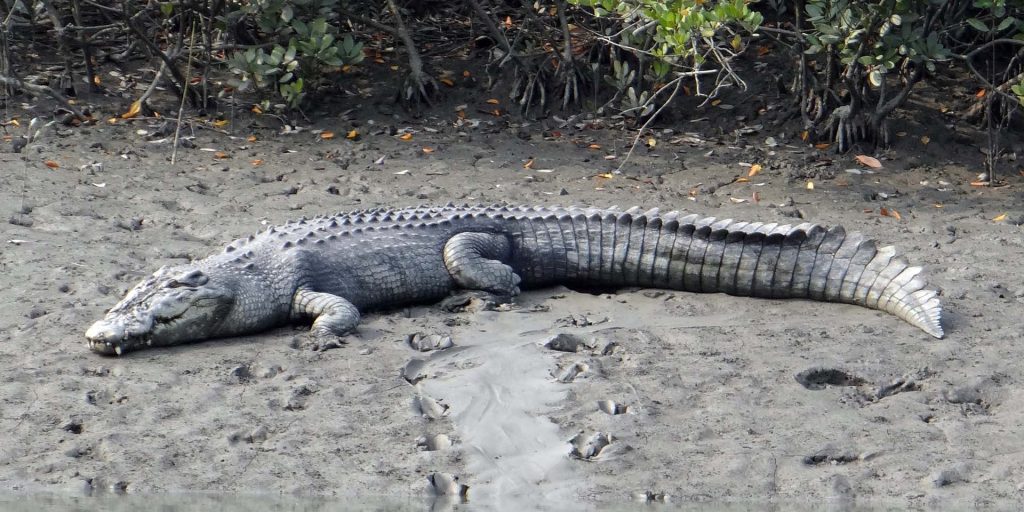
In the higher areas of the Sundarbans, crocodiles build nests using shrubs, leaves, and tree branches. A female crocodile lays between 20 and 72 eggs in the nest. She incubates the eggs for about three months until they hatch. The female crocodile does all the nesting and egg-care by herself. After the eggs hatch, the mother crocodile also looks after and protects her young for some time.
 5,000 tk
 2 Days - 3 Nights